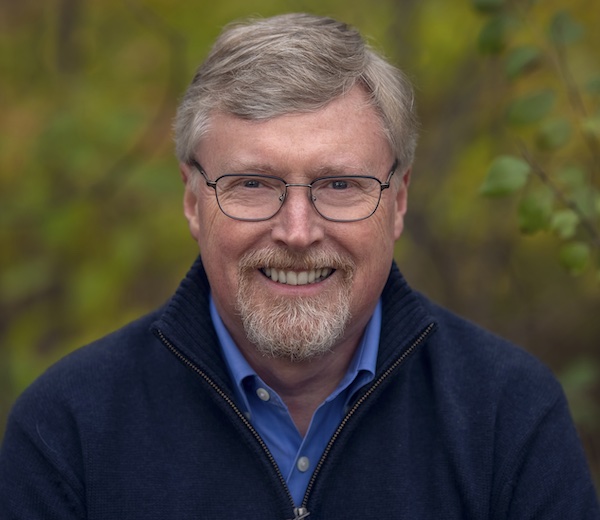
I did not begin my career thinking I would spend my life writing about funerals, loss, or farewell. Like many people of my generation, I started out following practical opportunities rather than a calling.
I grew up in a small town north of Toronto, Canada in a family where independence was expected early. If you wanted something, you worked for it. That assumption shaped me more than any formal lesson in entrepreneurship. It taught me that responsibility was not something you waited for. It was something you took.
I moved to the United States for college, initially studying engineering before graduating with a degree in mathematics and computer science. My early professional years were spent in industrial automation, writing software and mathematical algorithms used in automotive factories. It was demanding, technical work, and I enjoyed it.
Several years into that career, a medical warning forced a change. I was advised to step away from constant screen-based programming or risk losing my eyesight. That moment pushed me into management roles and, eventually, into leadership positions inside growing technology companies during a period of rapid consolidation and acquisition.
Watching senior executives repeatedly promoted and then removed during acquisitions taught me another lesson I did not forget. Control over your future matters. That realization led me to start my first company in my mid-thirties.
That business focused on customer relationship management software and consulting for large organizations, including global corporations and government agencies. It grew quickly and, for a time, successfully. The events of September 11, 2001 changed that trajectory abruptly. Within months, spending froze, projects halted, and the company could not survive. I sold it under pressure and walked away with both scars and clarity.
What followed was not a reinvention as much as a refinement. I started a consulting practice focused on strategy, messaging, and growth. Over time, that work brought me into many industries, but one encounter in 2003 changed the direction of my life.
At the request of a client, I agreed reluctantly to meet with a group of funeral home owners. I expected a conversation about selling traditional services more effectively. Instead, I met people who cared deeply about the families they served and were frustrated by a growing disconnect between what families needed and what the profession had been taught to provide.
That meeting marked the beginning of more than two decades working closely with funeral professionals across North America and Australia. My role was to help them adapt to a culture that had changed, often without anyone noticing.
Alongside that professional work, my own life brought loss into sharp focus. My mother died after a long illness. My father chose to have nothing at all when he died, and the absence of any gathering left a quiet emptiness that surprised me. Later, I lost my daughter unexpectedly. In that moment, all professional distance disappeared. I needed help, not expertise. I needed people who understood how to hold a family together when words fail.
Those experiences clarified something that had been forming for years. The problem surrounding funerals is not cost, tradition, or even preference. It is timing. Our culture treats death as a moment rather than a season, and by the time families are asked to reflect, there is no space left to do it well.
Over time, this understanding led me to step away from thinking primarily as a marketer and toward thinking as an advocate. I began writing to articulate what I had seen repeatedly. When families are given orientation earlier, regret diminishes later. When meaning is reclaimed before crisis, the farewell changes for everyone involved.
That work resulted in my book A Beautiful Farewell and a companion booklet, Your Farewell Guide. These were not written to promote a service or a system. They were written to restore permission. Permission to reflect. Permission to gather. Permission to do something meaningful rather than nothing at all.
Today, my work focuses on naming the cultural forces that make loss harder than it needs to be and on helping both families and those who serve them find their way through the final season of life with dignity, intention, and care.